


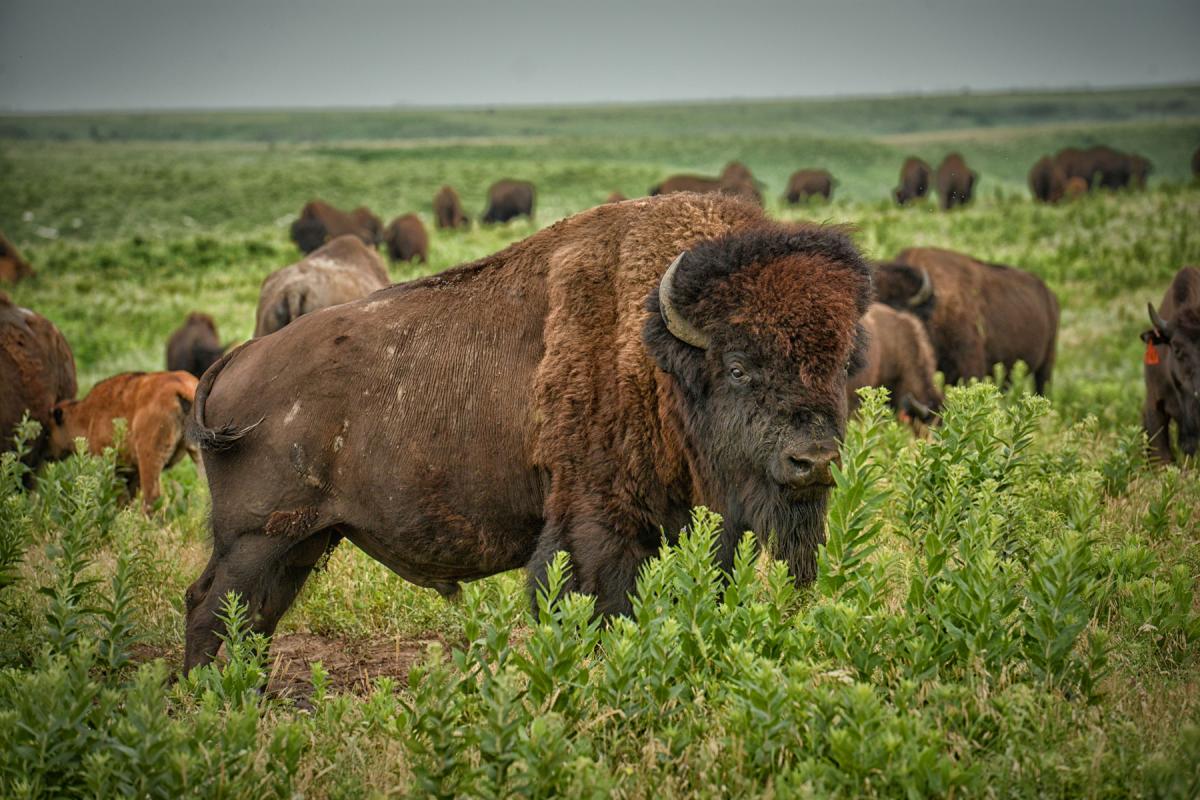
Inside the refuges and ranches that are helping bison reclaim their native ground
Millions of bison once shaped the Kansas prairie. As a keystone species—a species on which other species in an ecosystem largely depend—bison grazed, wallowed, and fertilized the land, creating conditions that plants and animals relied on. But in the 19th century, as settlers moved in and bison were slaughtered, the prairie ecosystem’s health began to decline. Kansans turned to domestic cattle and other methods to keep the land healthy. Today, a dedicated group of bison ranchers is working to preserve and restore this species to its native environment.
Maxwell Wildlife Refuge in McPherson County was established in 1949, but its history dates even further back. In 1859, Henry Gault Maxwell established a homestead. As he lived on the property, he noticed buffalo wallows and eventually wanted the state to bring back the buffalo. He dreamed of preserving a piece of the prairie as it existed before settlement. In 1944, his son Henry Irving Maxwell deeded 2,560 acres to the Kansas Department of Wildlife and Parks to establish the refuge. The KDWP later added an additional 260 acres, and a small bison herd was later reintroduced to the prairie.
Today, the Maxwell refuge manages about 200 bison and 50 elk.
“It is not a state park, but it is open to the public 24/7,” says Trisha Smith, director of the Friends of the Maxwell Wildlife Refuge.
There’s no cost to drive through the park. Guests can follow a public access road that goes through the middle of the refuge. But, contrary to what one might think, it’s not always easy to catch a glimpse of these large animals on that much acreage.
“There’s about a 50-50 chance of seeing the bison if you drive through on your own,” Smith explains. “That’s why we opened up [Friends of Maxwell], so we could give tours on the parts of the refuge that are not accessible to the public.”
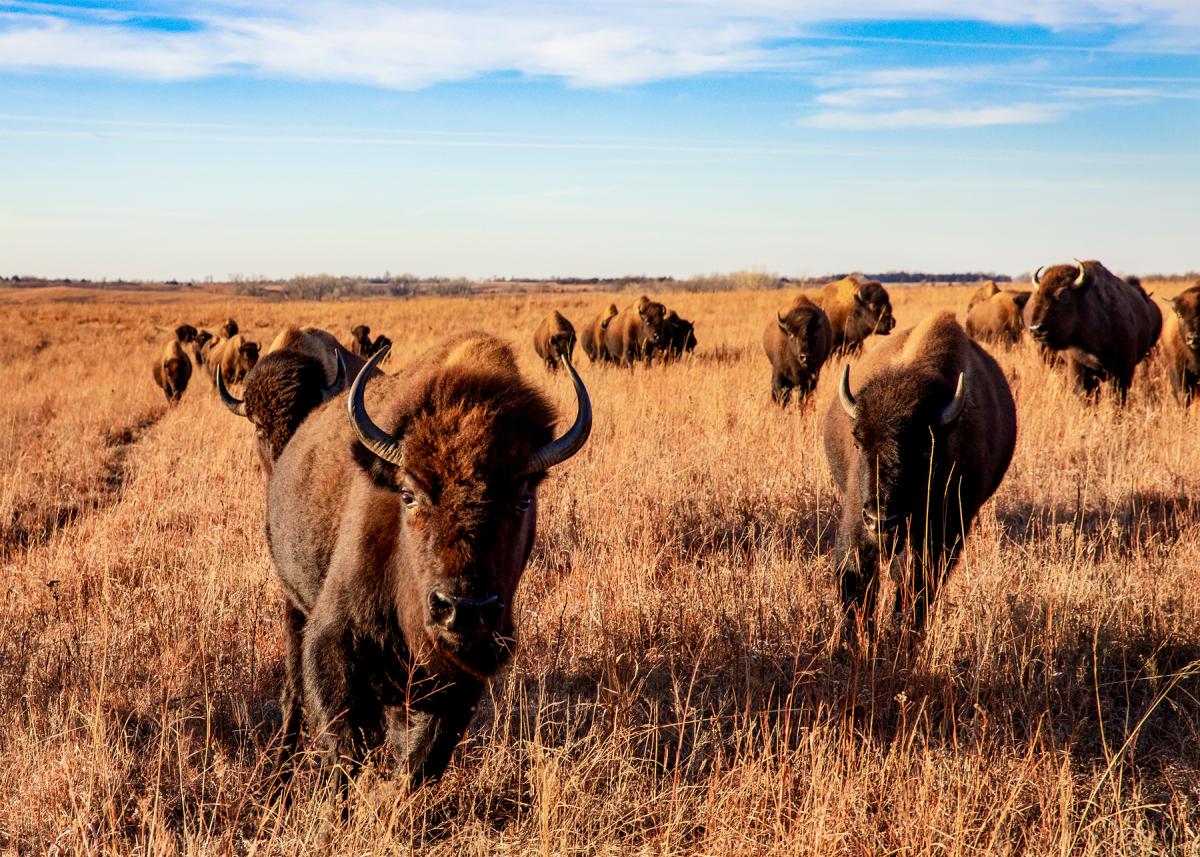
Established in 1993, Friends of Maxwell offers 45-minute guided tours twice a week. Volunteers with the organization use nutritional supplements to entice bison, who otherwise freely roam and graze within the refuge.
The nonprofit Maxwell Wildlife Refuge is dedicated to protecting and preserving this native species. However, the largest bison herd in Kansas is located in south-central Kansas near the Oklahoma border.
Z Bar Ranch, a privately owned ranch dedicated to preserving the prairie, currently manages 2,000 bison on 42,400 acres.
Over the last 25 years of working with the ranch, interim ranch manager Eva Yearout has witnessed the positive impact that rotational grazing from bison can have in restoring the prairie. In fact, it has been vital in bringing back native species of plants and animals.

“The prairie ecosystem is diminishing,” Yearout says. “We try to make sure everything has a fighting chance. You can’t pick one thing over another, and you don’t have to. You can have wildlife diversity and habitat and still have a profitable, productive ranch.”
Yearout knows their efforts haven’t been in vain. Groups such as Pheasants Forever, the U.S. Forest Service and Kansas Wildlife and Parks routinely visit the ranch to survey various plant and animal populations, and the numbers don’t lie.
For example, the Bird Conservancy of the Rockies surveyed the area 15 years ago. “A quarter of the scissor-tail flycatchers in their whole survey were on the ranch, which was great,” Yearout says. “It lets you know if your grasses and ecosystems are improving or not doing as well.”
Each year, ranch employees gather up the bison for annual health checks. In addition, employees train the bison with range cake to avoid overgrazing in any one spot on the ranch. Otherwise, they’re “pretty self-sufficient,” Yearout says.
The herd at Z Bar produces about 500 calves a year. To maintain proper herd size, about 300 are sold as meat each year.
“This is a business,” Yearout explains. Most of the profits go toward supporting their bison herds and revitalizing the prairie.
“You have to be good stewards of the land,” Yearout says. “You have to have healthy soil, healthy grasses, a healthy environment for all the native plants.”
maxwellwildliferefuge.com / Z Bar Ranch
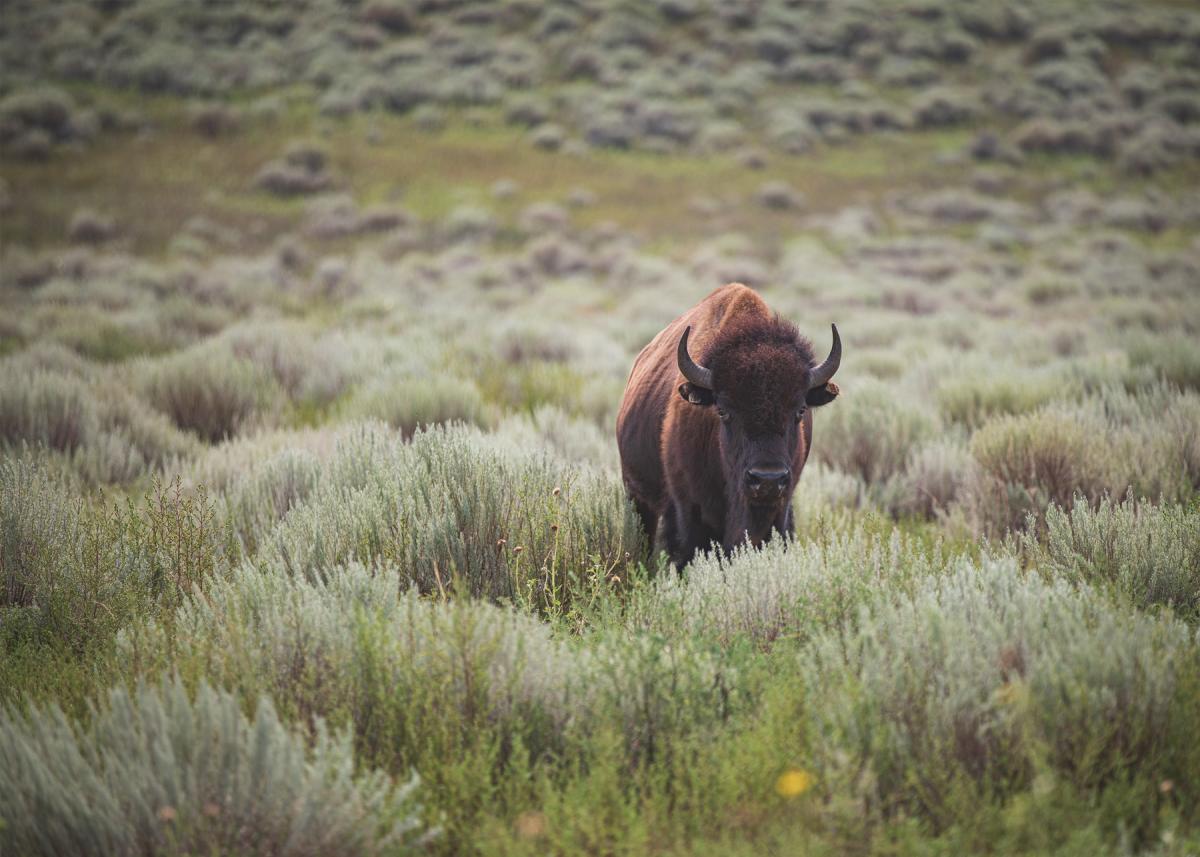
Sandsage Bison Range
This range near Garden City is home to about 31 bison. Established in 1924 by President Woodrow Wilson, it is managed by Finney County and the Kansas Department of Wildlife and Parks. Visitors are urged to schedule tours in advance through Friends of Sandsage Bison Range. Volunteer-run tours may be reserved from March 2 to October 31. Self-guided tours are not available.
Tallgrass Prairie National Preserve
In the heart of the Flint Hills, the Tallgrass Prairie National Preserve is a unique private-public partnership between the Nature Conservancy and the National Park System. With 10,894 acres north of Strong City, it is the largest expanse of tallgrass prairie left in the world. Since 2009, it’s also home to about 100 bison. There is no entrance fee to explore the visitors’ center, which is open every day except major holidays. Visitors can also explore the walking and hiking trails on foot—there are no public driving roads through the preserve. Self-guided tours are open year-round; reservations for group educational tours must be scheduled at least two weeks in advance to ensure staffing.


