


How our state laid the groundwork for American soccer
Sporting Kansas City alumnus Matt Besler has always been proud of his home state. A Kansas native who grew up in Overland Park—and the first Kansan to play in the FIFA World Cup TM—Besler starred for Sporting for 12 years and has competed against athletes from all over the world. Throughout his soccer career, however, he has encountered bias from international players about where he’s from—a response that’s only deepened his pride.
“It was always, ‘You’re not as good as us.’ … That’s something that I have experienced many, many times, and it started at a young age,” Besler says. “It’s a big piece of who I became, and eventually one of the biggest reasons I am so [proud] of being from Kansas and showcasing that.”
Kansas has a long, deeply rooted history with soccer. As the home of one of the largest youth soccer clubs in the country, a world-class professional stadium and a passionately dedicated fan base, the Sunflower State has rightfully earned its reputation as the Soccer Capital of America. It has helped elevate the sport not just in the Midwest but across the entire nation.
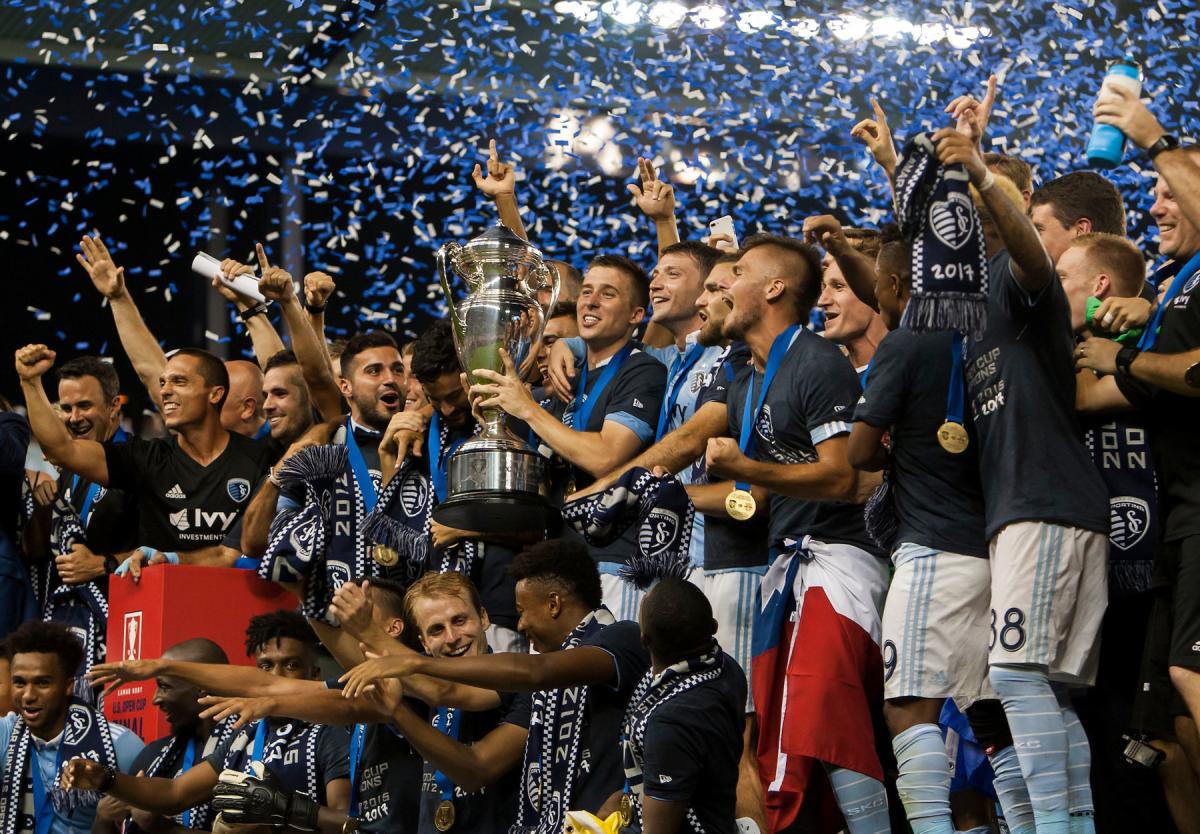
(Sporting Kansas City, Champions of the 2017 U.S. Open Cup, photo provided by Sporting Kansas City)
A Budding Interest
Bringing soccer to the Midwest started with one man: Lamar Hunt. Best known as a key figure in football history—he was a principal founder of the American Football League and famously coined the term “Super Bowl”—Hunt’s influence on American soccer was just as significant. He was a founding member of the United Soccer Association in 1967, which later merged with a rival organization to form the North American Soccer League (NASL), the first American soccer league to find success on a national level.
According to a 2025 KCUR article, Spurs general manager John Tyler explained that revenue generated from the NASL helped establish the Heart of America Soccer Association, an influential amateur league. From there, more youth soccer organizations took root in the Kansas City area, including the Johnson County Soccer League, Kansas City Legends and Brookside Soccer Club. Clubs like these helped kids cultivate a passion for the sport from an early age. Many of today’s national soccer athletes got their start playing as children, including Besler, who first touched a soccer ball after his parents signed him up for Blue Valley Recreation.
While Hunt helped position the state for a national soccer presence, Klaus Kollmai, an esteemed soccer coach of 13 years and referee of 32 years, was simultaneously working to expand playing opportunities for Kansas youth.
Kollmai moved to Wichita from Berlin in 1956. He remembers watching immigrants who had also settled in Kansas gather in local parks to play soccer. A men’s league likely took shape in the late ’50s and early ’60s, he says, and some high school-aged players suited up alongside the adults.
“It was fun to see,” he says. “Unfortunately, it didn’t involve what I wanted to do, and that was to make it a high school sport.”
At the time, youth teams organized under the American Youth Soccer Organization were already active in the Wichita area. But Kollmai noticed a gap: Once players hit a certain age, they craved something more competitive.
“I wanted to have kids when they hit that age, freshman going into high school,” he says. “[That age can] start playing competitive soccer.”
He started a school soccer club in 1977 while teaching at Wichita South High School. By 1985, the boys’ teams were competing at the state level. A couple of years later, the same opportunity opened up for the girls.
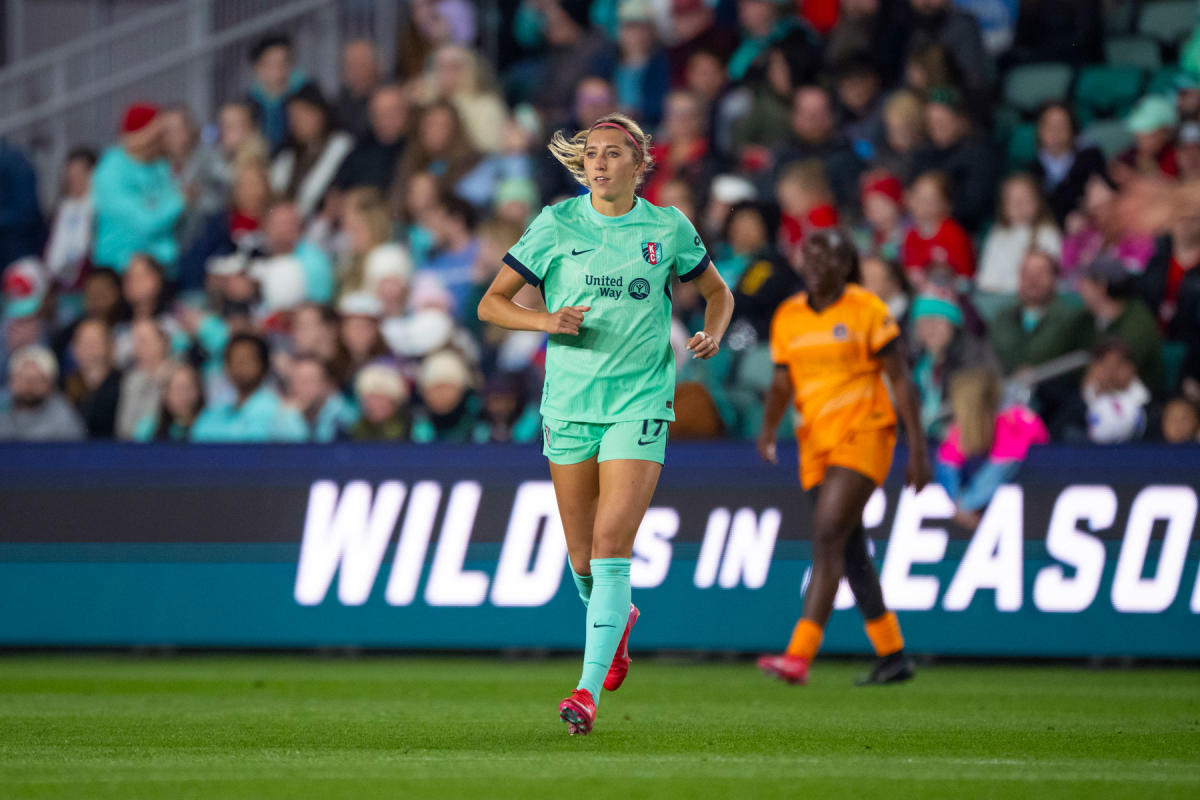
(Mary Long, Mission Hills native, and forward for the Kansas City Current / photo provided by Kansas City Current)
Besler, a 2005 Blue Valley West High School alumnus, was among the wave of kids embracing the sport as it gained traction. “It was the popular thing to do at the time,” Besler says. “It was still a relatively new sport but seemed like a lot of the kids were trying it.”
By third grade, Besler had joined the Kansas City Football and Cheerleading Alliance, where he played through his senior year of high school. Since then, he has become a five-time Major League Soccer (MLS) All-Star.
Mission Hills native and Kansas City Current forward Mary Long says some of her best memories as a young player come from the Heartland League. “One tournament, you’re playing four games in one day. It was so much fun,” Long recalls. “Weekends like that are the reason I fell in love with the game.” A Shawnee Mission East High School alumna, Long later helped lead her professional team to a bronze medal at the 2024 FIFA U-17 Women’s World Cup.
Lamar Hunt and the MLS
Dedicated to growing soccer in the United States, Hunt purchased the professional team Kansas City Wiz in 1995. The following year, the Wiz became one of 10 original charter members of MLS. After its inaugural season, the Wiz was renamed the Wizards after a branding dispute.
According to Nate Bukaty, author of the new book Pitch Perfect: How Kansas City Became the Heart of American Soccer (Triumph Books, 2026), Hunt’s influence was essential. Without him, Bukaty says there’s “no way” the Wiz would have been an original charter member.
Bukaty, a former Sporting KC broadcaster, adds that interest in the Kansas-based team had begun building years before he joined the booth in 2015. When Hunt announced his intent to sell the Wizards in 2004, a grassroots campaign called “Save the Wizards” emerged to keep the team in the area.
The effort paid off. OnGoal purchased the club from the Hunt Sports Group on August 31, 2006, allowing the team to remain in the metro area. Within three years, plans for a new soccer stadium in Kansas City, Kansas, were announced. In 2011, the team officially rebranded as Sporting KC.
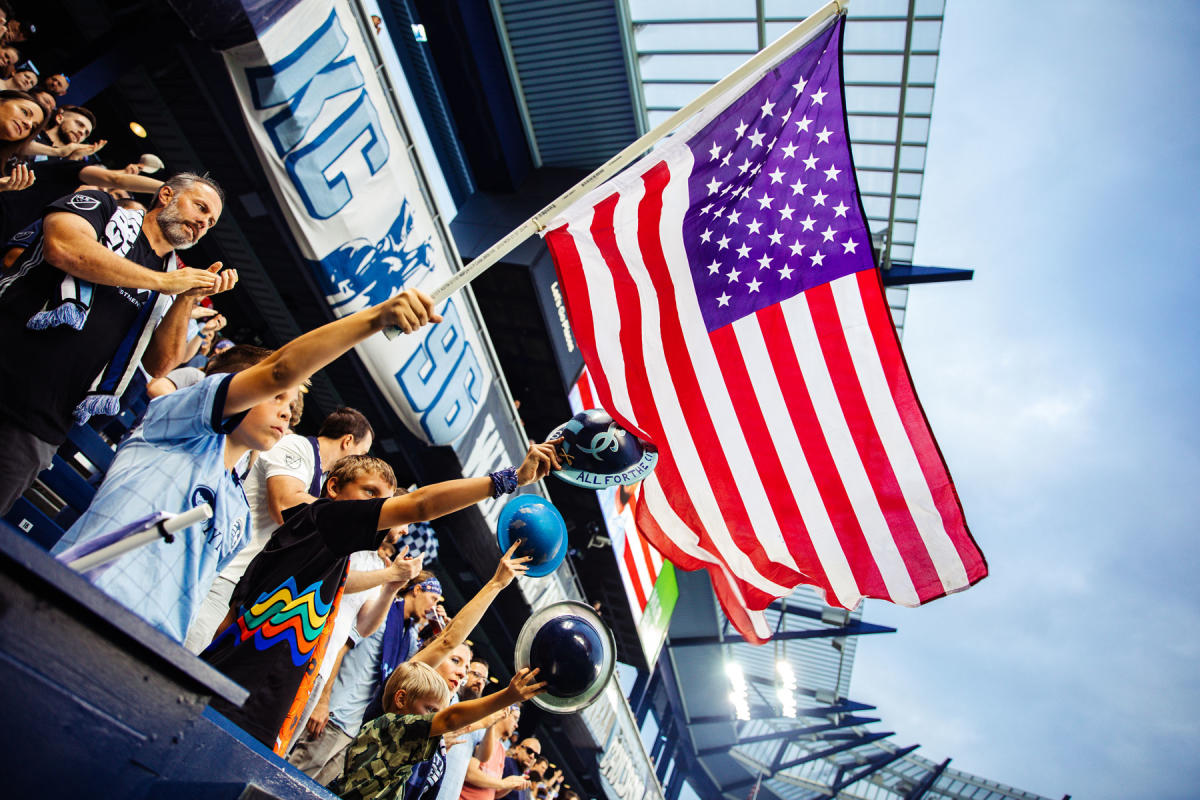 (Photo provided by Kansas Tourism)
From Magic Marker Jerseys to Stadium Sellouts
Bukaty, a Wyandotte County native who is now an MLS play-by-play announcer on Apple TV, says his morning sports talk show in Kansas City caught the attention of Sporting KC early on. Over time, fans have told him that his passion for soccer shows in how he talks about it and helped spark their own interest in the sport.
“If the people covering sports don’t think it’s a legitimate thing and think it’s something to be mocked instead of taken seriously, then why would the audience take it seriously?” Bukaty asks. Besler says he feels lucky and grateful to have been part of an environment that was “so special” during his Sporting KC tenure.
“It was a fun time because it all felt new and organic. We were going through a lot of these experiences together with the fans and with the city because nobody had ever experienced it before,” Besler says. “We had a brand new stadium, a rebranded identity … We were going through everything together.”
Long describes a similar sense of building something amazing. She remembers attending soccer games that drew maybe 1,000 to 2,000 fans. Now, her matches are almost always sold out.
“I definitely don’t remember it being like that when I was younger,” she laughs. For Kollmai, watching soccer gain popularity in Kansas has been emotional.
“We had to take magic markers in the early years and put them over T-shirts so we could number them,” he recalls. “To see the facilities, to see the smiles on kids’ faces, see little ones dressed up in uniforms … Seeing the sport become what I would say is a legitimized varsity program throughout the entire United States is probably what’s made me the happiest.”
But the biggest contributors to the sport’s growth—and to the growing awareness of Kansas players on the national stage—are the Kansans themselves, Besler says. They’re what makes the state such a “special place to live and grow up.”
“Our people have a lot of pride,” Besler adds. “We are proud of where we came from, where we live, and we like showing other people what we’re about because we care about our state and our cities.”


