


After three years, the Kansas Museum of History is reopening with a reimagined visitor path, thematic galleries and fresh perspectives on beloved artifacts
The Kansas Museum of History has reopened. After a three-year transformation—the first major renovation since it opened in west Topeka in 1984. Admission to the museum is free through 2025.
Talk of redesigning the museum began in 2008, according to a timeline mapped out for the Kansas House Appropriations Committee by Patrick Zollner, executive director of the Kansas Historical Society. The project resumed in 2015, when a feasibility study recommended raising the necessary funds through a capital campaign. That same year, the Hansen Foundation donated the first $1 million toward the project, and the Sunderland Foundation added another $1 million in 2019. Conceptual designs were approved in 2021, and dismantling began in September 2022.
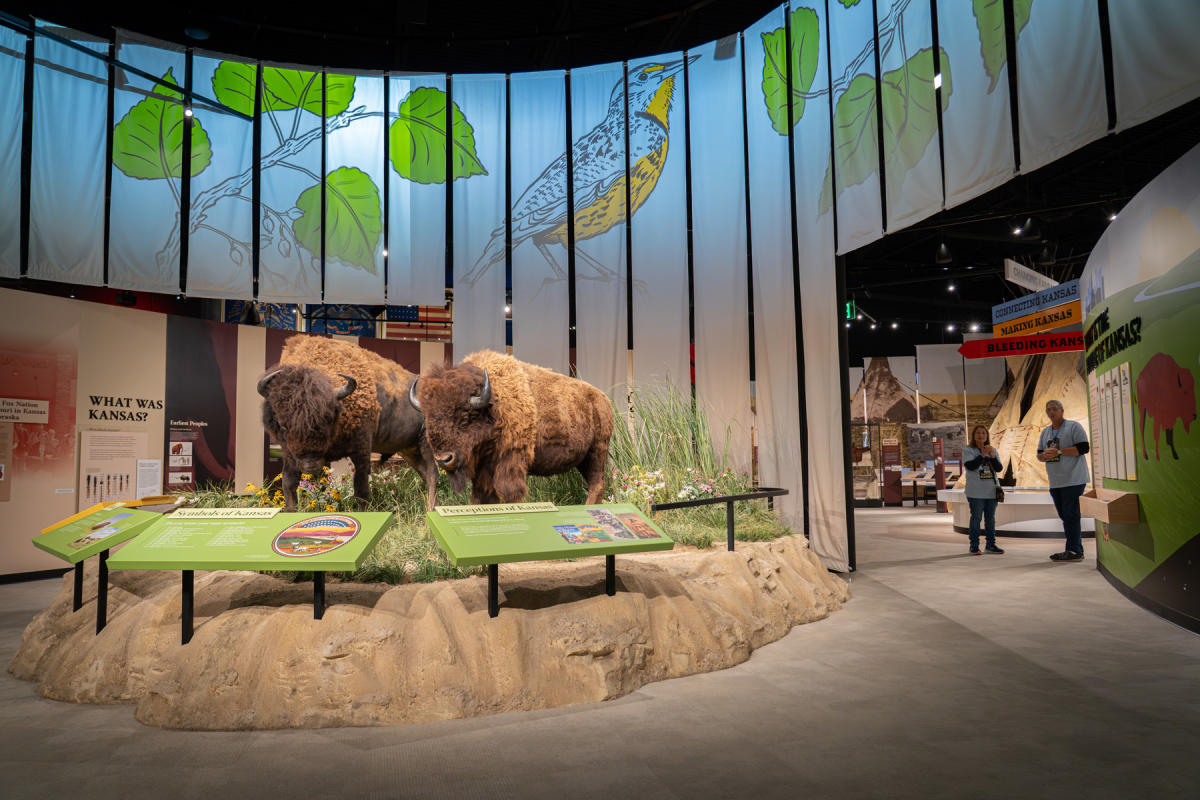
The last three years have felt like a complete home renovation, says exhibits director Nate Forsberg. It wasn’t until three months ago that the walls were painted, the carpets and flooring were installed, and the “home” started to feel fresh and new. “But [if you had talked with me] six months, a year ago? We were down to concrete floors and a big empty space,” Forsberg explains.
The process may have been daunting at times, but now that the reopening date is drawing closer and the designs are taking shape, the museum staff is excited about the reimagined space.

“There’s an energy right now that I don’t think we had even a few months ago,” Forsberg says.
Dr. Sarah Bell, the director of the Kansas Museum of History, agrees. She describes that energy as the momentum that’s pushing them toward the finish line.
“I have all the feelings. It’s excitement, it’s terror, it’s joy, it’s ‘I can’t believe this is finally happening,’” Bell says. “We’ve been looking at all of this on a computer screen for months and months, so for it to actually be physically in place and getting to see it come together is really exciting.”
A stroll through the in-progress space immediately reveals a Kansas Museum of History that is both familiar and brand new. Gone are the tight quarters and maze-like feel of the past four decades. Now there is room to step back and fully take in the exhibits, which are no longer in chronological order but thematically reorganized.
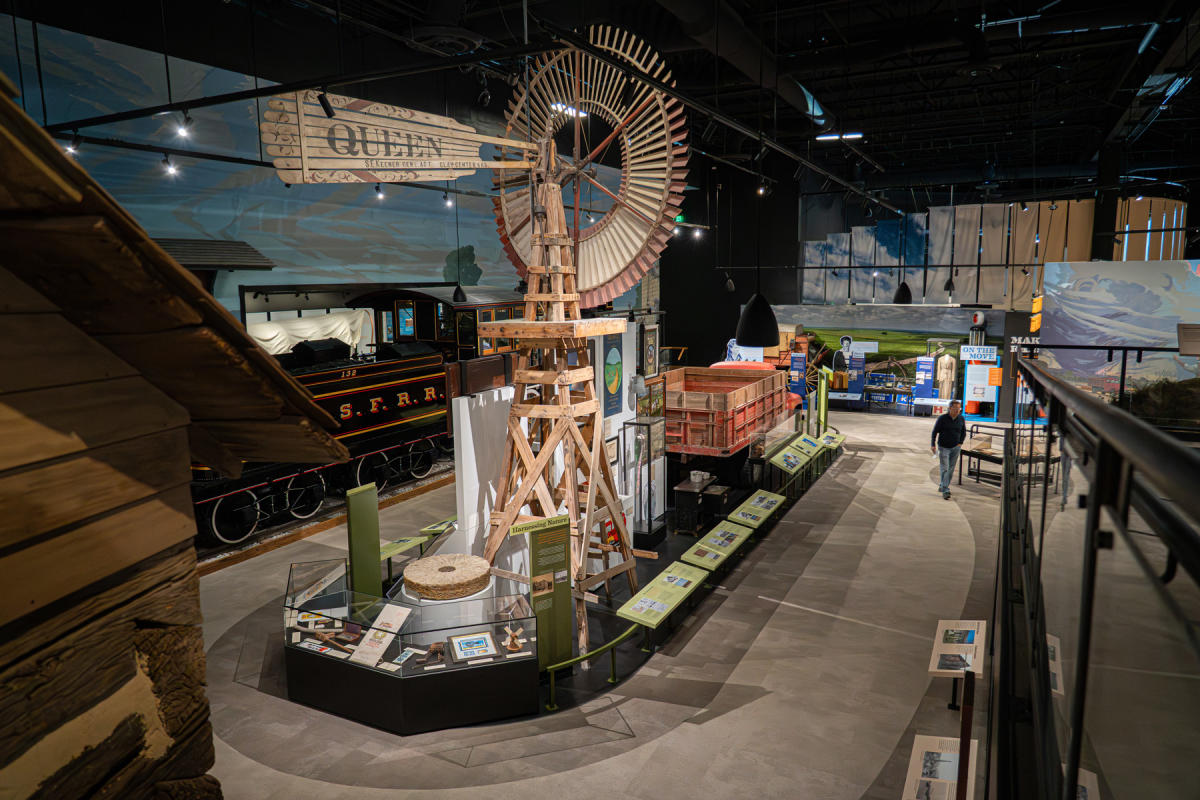
The museum staff is most excited about the new ramp, the biggest addition to the space. It moves visitors up, down and through different museum experiences from various vantage points. On the ramp, visitors can see some of the museum’s most beloved artifacts, including the log cabin, 1914 Longren biplane, and, of course, the treasured centerpiece of the Kansas Museum of History, the Atchison, Topeka & Santa Fe locomotive #132.
The ramp also takes visitors to the new interactive boxcar exhibit, allowing visitors to go inside the boxcar and experience what it was like to live in one.
“The boxcar provides us the opportunity to share the story of Mexican families who migrated to Kansas in the early 1900s,” Bell says. Many of these families temporarily lived in boxcars due to limited housing, and this new exhibit will feature a few of their oral histories.
The ramp is something that Forsberg says he hasn’t seen in many museums. “The excitement of having people coming in and seeing it …,” Forsberg says. “We know it’s something that people are going to talk about. It’s something that kids are going to remember.”
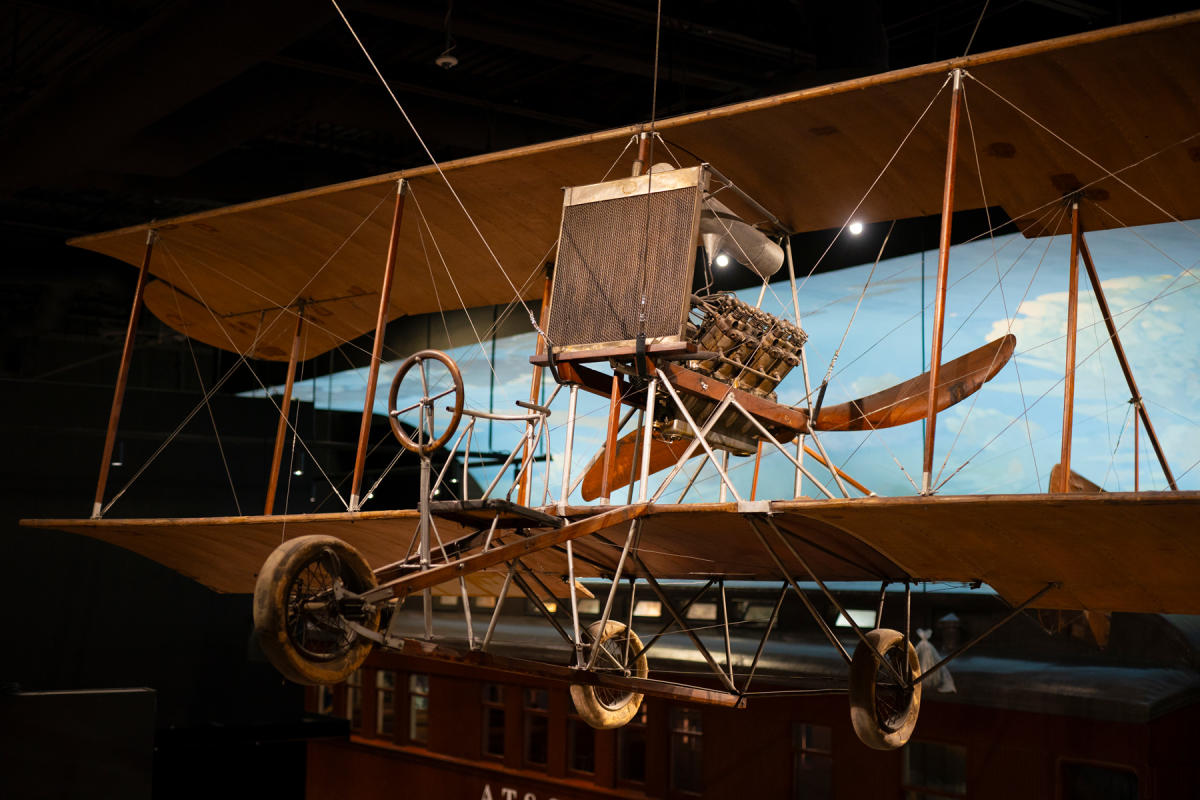
Renovating the space also revealed some hidden treasures as staff sorted and cared for the artifacts. Collections manager Nikaela Zimmerman was responsible for cleaning the fragile 1914 biplane. “In doing so, [Zimmerman] found words that had been written on the wing that said, ‘wind from south,’ which we had never seen before,” says director of communications, Bobbie Athon.

The biplane, which has been part of the museum since it first opened, once hung in a dark space where visitors struggled to see it. But now, the ramp improves access to the museum’s most popular displays, culminating with a view into the log cabin’s top floor—a perspective the public hasn’t had before. It’s an astonishing transformation that lets visitors see familiar pieces in a new way.
Another exciting change to the museum will delight four decades’ worth of children—past and present. “We have good news for all the people who are wanting to see the diner again,” Bell says. “It’s going to be on display and usable in our lobby.”

Because the diner has always been a reproduction and not an artifact, Forsberg and his team were able to disassemble and restage it in the lobby’s vending and dining area. Now, folks can not only sit in the diner, but eat at it, too—something kids have wished for since the museum first opened.
But for Bell, the ramp is the heart of the museum’s remodel because people will walk away and remember how they felt about the experience. Those feelings, much like the nostalgia entwined with the diner, will drive people to come back and experience it again, she says.
“We are highlighting some different stories that we haven’t highlighted before,” Bell says. “That, to me, I think is even more exciting—that people are going to have this new entry into understanding Kansas history because of this [remodel].”
“We didn’t really tell many people’s stories in the older gallery,” Athon says. “[The exhibits were] based on the artifact, and less on people … it’s been really fun to delve into those.”
Odds & Ends
Here are a few of the most unusual items on display at the Kansas Museum of History.
- A 1930s WPA outhouse from a farm near Dorrance
- Former governor Alf Landon’s bulletproof lead podium from his 1936 presidential campaign
- A 10-foot-tall robot named Strom from Kevin Wilmott’s 2013 film Destination: Planet Negro
- A new mural by artist Stan Herd that features images from the 1960s and 70s (Search for depictions of an album cover from Topeka’s classic rock legend Kansas and of journalist Bill Kurtis on air during the 1966 tornado.)
Don’t Miss Celebrating KANSAS!
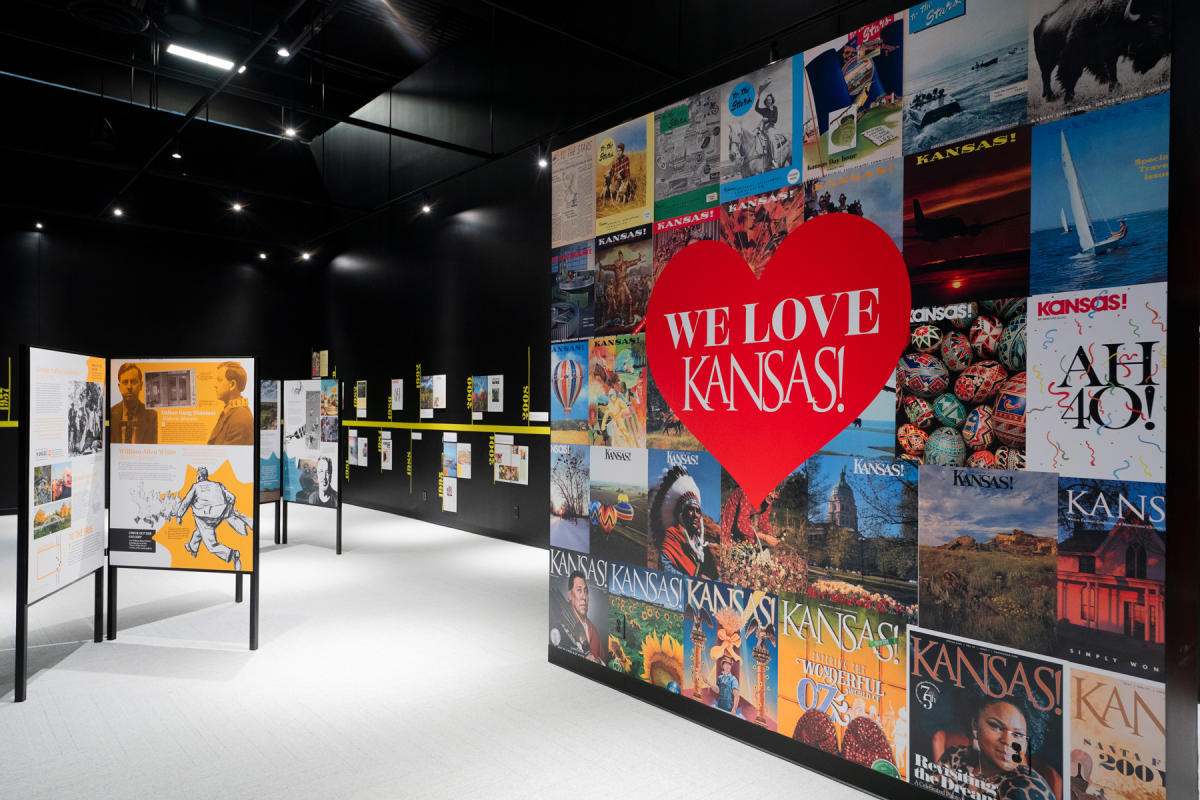
While touring the Kansas Museum of History, be sure to stop by “Celebrating KANSAS!”—a special exhibit honoring 80 years of the magazine.
The experience begins with a striking illustration by Galen “Duke” Senogles, who served as the magazine’s art director for more than 30 years. Inside, oversized panels styled like magazine pages lead visitors through themes such as Notable Figures, Quirky Kansas, and Unique to this Region. Artifacts from the museum’s collection add historical depth and context.
The exhibit also pays tribute to the hundreds of editors, writers, photographers and artists who have shaped the magazine. Among those highlighted are renowned photographer Jim Richardson and Flint Hills writer Zula “Peggy” Bennington Green. Along the gallery walls, a timeline traces significant milestones in the magazine’s history.
Created in partnership with Kansas Tourism, publishers of KANSAS!, and the Kansas State Historical Society, “Celebrating KANSAS!” debuts with the grand reopening of the museum’s main gallery on Saturday, November 22, and will remain on view through May 2026.


