


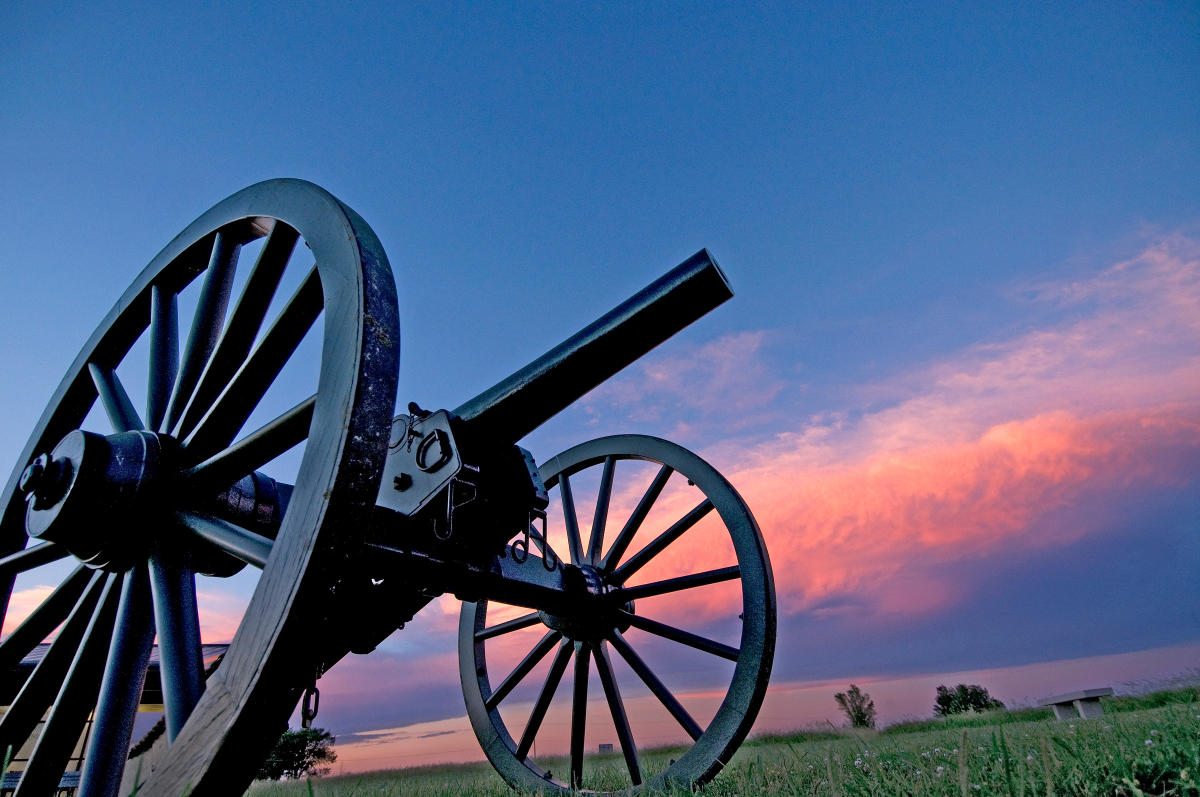
Step Into Kansas’ Civil War Past at Mine Creek Battlefield and the John Brown Museum
For Private James Dunlavy, October 25, 1864, would shape his life.
Serving in 3rd Iowa Cavalry Regiment, Dunlavy found himself thrust into a charge against Confederate forces near modern Pleasanton. A shell exploded in front of Dunlavy, filling the 20-year-old’s eyes with dirt and injuring his right wrist. Undaunted, Dunlavy continued to fight and later single-handedly captured Confederate Major General John S. Marmaduke, who mistook him for one of the rebels who had been ordered to dress in confiscated Federal uniforms. For his efforts, Dunlavy won a Congressional Medal of Honor and an honorary early discharge.
Dunlavy’s story is among those told at the Mine Creek Civil War Battlefield State Historic Site near Pleasanton.
“The significance of this site is that it commemorates the second largest cavalry battle of the War Between the States and the only major battle fought in Kansas,” says Alison Hamilton, the co-administrator of the Mine Creek Civil War Battlefield State Historic Site.
Mine Creek also marks the final defeat of a bold, Confederate swing through Missouri in hopes of reviving the South’s dwindling prospects for victory. Harried along their route and defeated at the Battle of Westport, Price’s remaining troops, pursued by Union forces, retreated south through Kansas.
Events of the larger campaign and the details of the Mine Creek battle are told at the visitors center, which does not charge for admission.

“A perk when you come inside is we have a viewing area where you can watch a 45-minute video called The Lost Battle of the Civil War produced by The History Channel and it is about this particular battle,” Hamilton says. “We also have a small museum with interpretative boards and artifacts from the actual battlefield.”
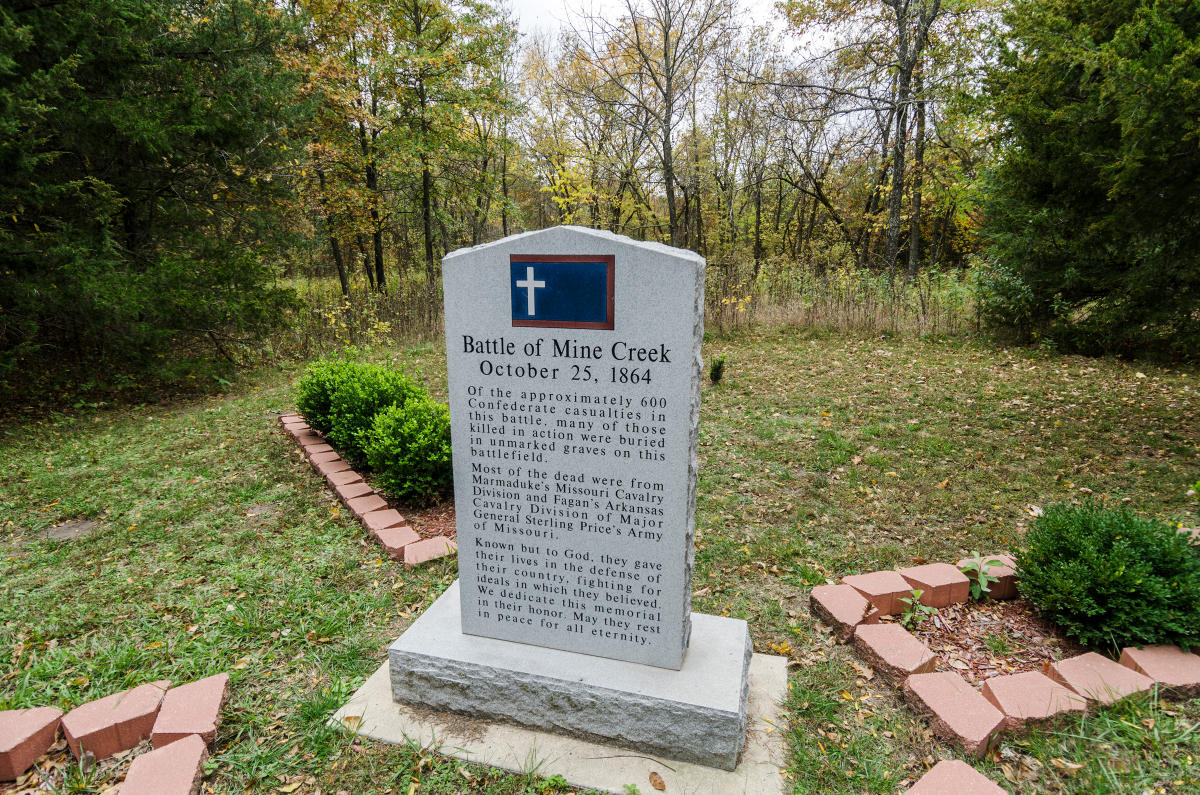
The center’s bank of windows overlooks the field where two Union brigades defeated a large number of Confederates accompanying the last wagons of a 15-mile-long supply train.
Outside, a trail featuring multiple interpretive signs at locations of interest during the battle meanders through the field. In addition to the signage, storyboards offer recitations of eyewitness accounts, including a reading of a letter about the battle, his injury and the capture of Marmaduke that Dunlavy wrote his parents while recovering in Fort Scott. Another storyboard focuses on Barbara Dolson, who describes holding her infant daughter as she watched Confederate soldiers approach her parents’ home on the morning of the battle, and then rushing out with her mother to care for the wounded once the battle ended.
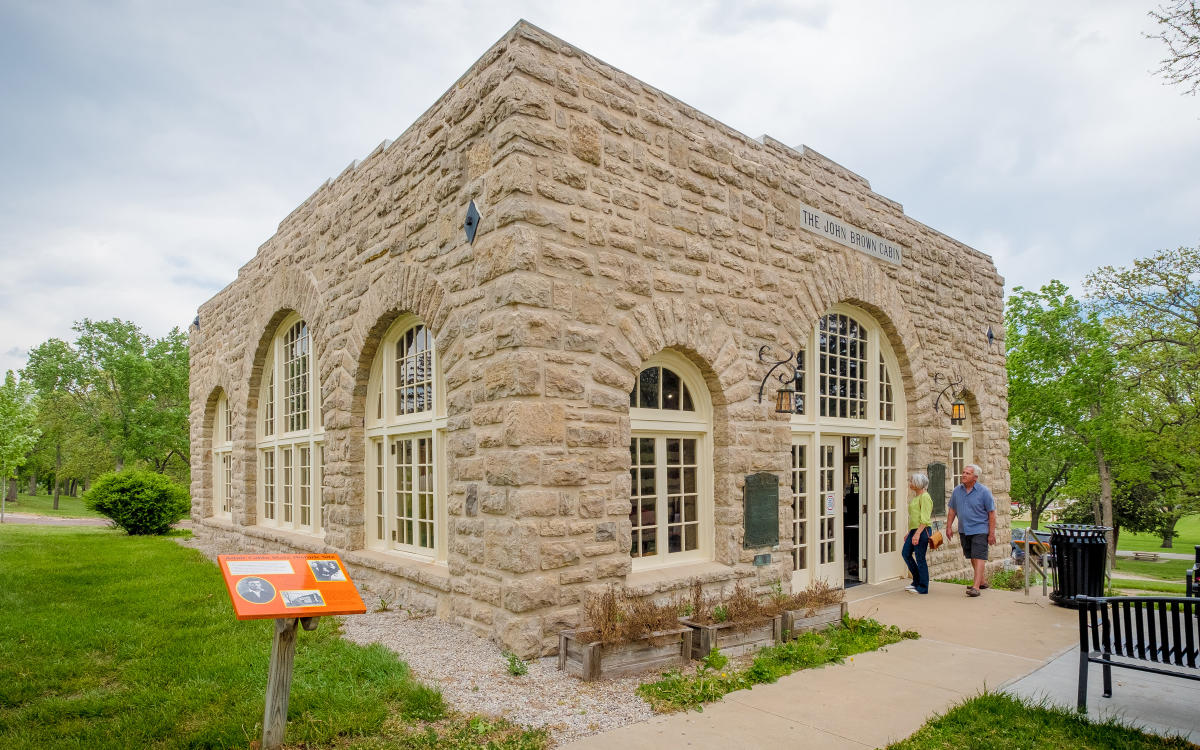
ADAIR CABIN/JOHN BROWN MUSEUM STATE HISTORIC SITE
Osawatomie
The cabin of Rev. Samuel and Florella Adair in Osawatomie was a station on the Underground Railroad and also was used by Florella’s half-brother, abolitionist John Brown, as his headquarters during his fight against slavery in Kansas Territory. Moved from its original location one mile west, the log cabin stands inside a stone pergola in John Brown Memorial Park, located on the site of the Battle of Osawatomie that occurred on August 30, 1856. According to Grady Atwater, site administrator, when Brown saw that approximately 250 proslavery militia were on their way to attack Osawatomie, he and about 30 of his men delayed the group, giving the townspeople a chance to escape before the proslavery forces burned the town. Interpretative signs throughout the park explain the battle, which was the largest armed conflict during the Bleeding Kansas era. The cabin includes family furnishings and belongings, Civil War weapons, and exhibits relating to Brown.


