


Photography by Aaron Patton
The new Etzanoa Immersion Center in Arkansas City brings the story of a lost civilization back to life
A new Kansas center is changing how we see the Native Americans who lived here for centuries—all while digging up new discoveries about their past.
“We realized during the pandemic that we have a lot of kids who don’t get to experience history,” says Ann Headrick, a former teacher and Etzanoa Conservancy board member. She is eager to have a place where this chapter of our history can come alive through hands-on learning.
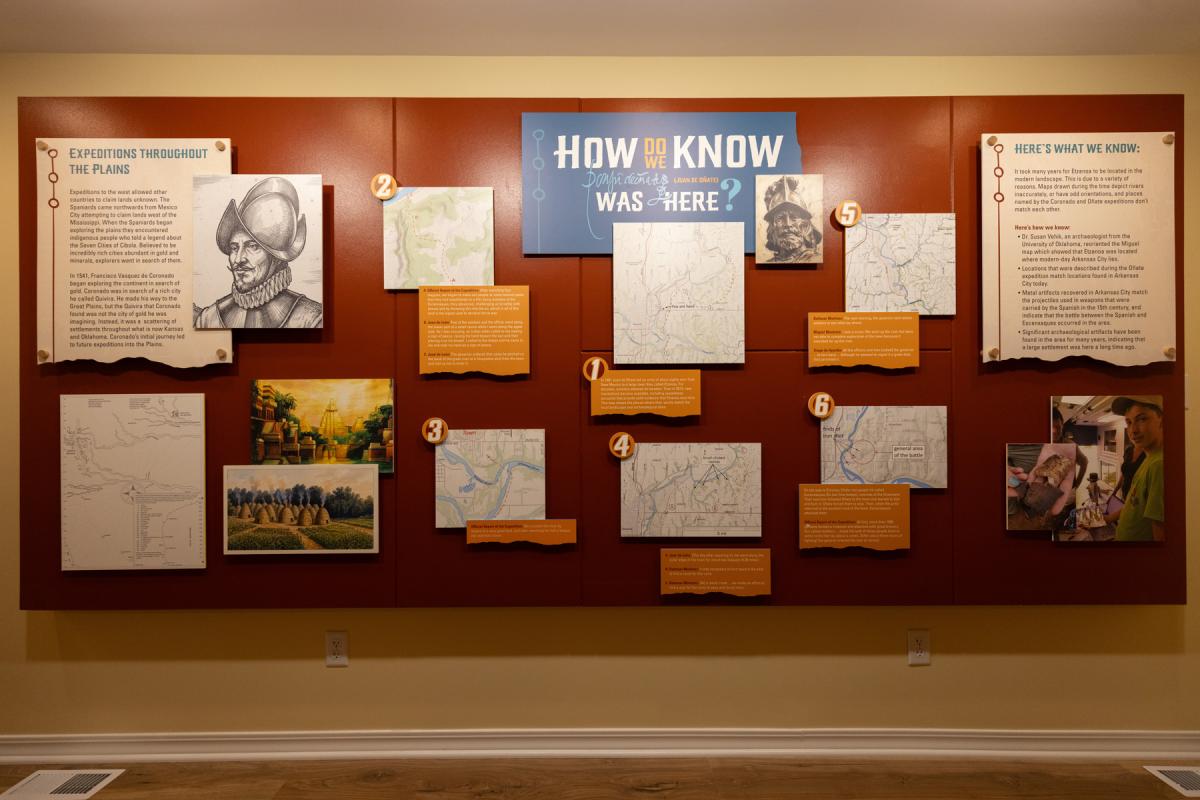
The Etzanoa Immersion Center, 28379 81st Rd. in Arkansas City, opened its doors in June 2026. Inside, visitors first see a large screen showing what the Etzanoa settlement might have looked like. Virtual-reality experiences, artifact exhibits, settlement site tours, outdoor trails and a replica grass house immerse guests in this lost world.
It’s all rooted in the 20,000 Etzanoans who lived along the confluence of the Arkansas and Walnut rivers from 1450 to 1700. They built grass-covered homes; cultivated beans, maize and squash; hunted bison; and sustained a community that stretched for miles. Archaeological digs suggest the community maintained a wide-ranging trade network, producing and supplying goods to Native peoples across much of the Northern Hemisphere.
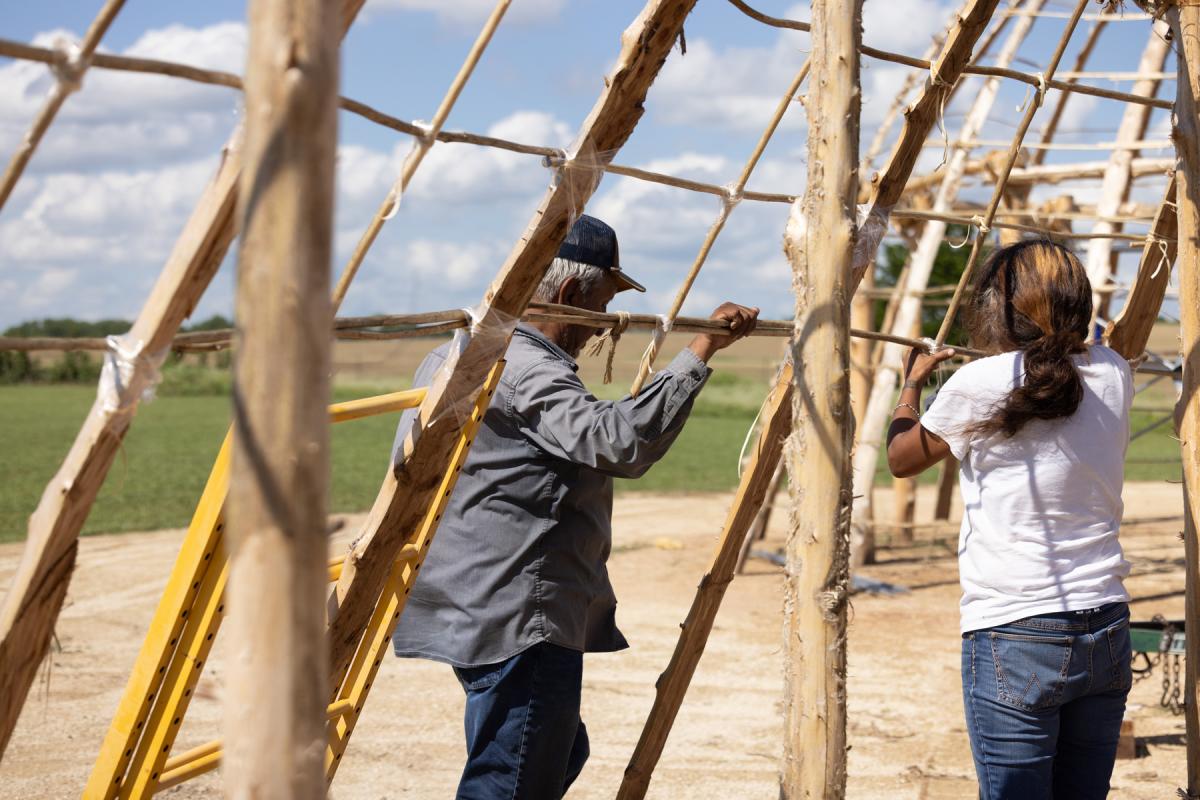
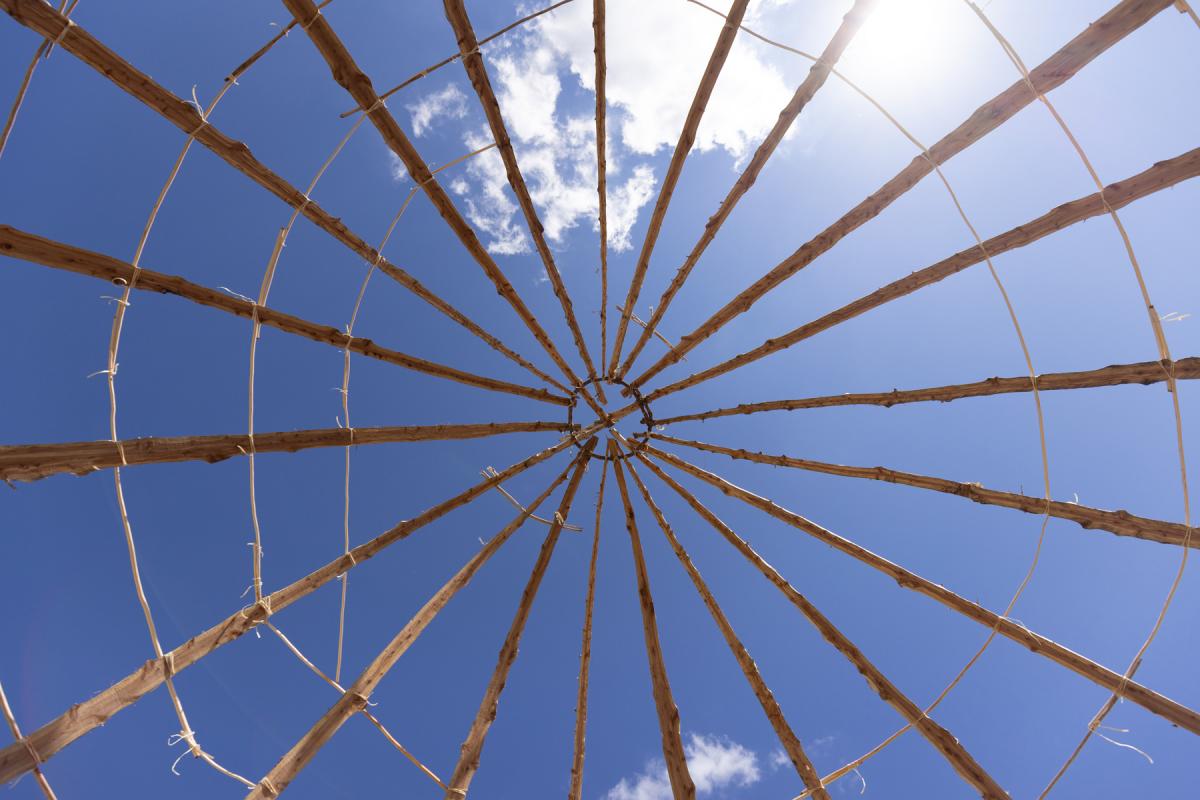
For about a decade, the conservancy has worked to deepen public understanding of Etzanoa and its significance. Now, with the new immersion center, it is forging relationships with the Wichita and Affiliated Tribes, whose ancestors lived in the settlement. Over the summer, tribal members built a model grass house and arbor to demonstrate how the Etzanoans lived and worked.
Originally, the conservancy board wanted to raise funds for a new building, but better ideas prevailed, Headrick explains.
“We had leased some property, plus we bought some property for the Etzanoa Conservancy,” Headrick says. “A house next door became available. That changed us. We thought, ‘Do we want to build this big building and be in debt? Or, could we buy that house and make it into our immersion center?’”
They opted for the house.
Donald Blakeslee, the Wichita State University anthropologist and archaeologist who oversaw more than a decade of digs and research at the Arkansas City site, believes Etzanoa is only one piece of a much larger puzzle. A complex of villages linked to Etzanoa stretched from Oklahoma north to Saline County and may have supported as many as 200,000 residents who lived in what is now Cowley, Sumner, Butler, Rice, McPherson and Marion counties. Today, Arkansas City—built atop Etzanoa’s remains—has not even half that population, with 11,750 residents.
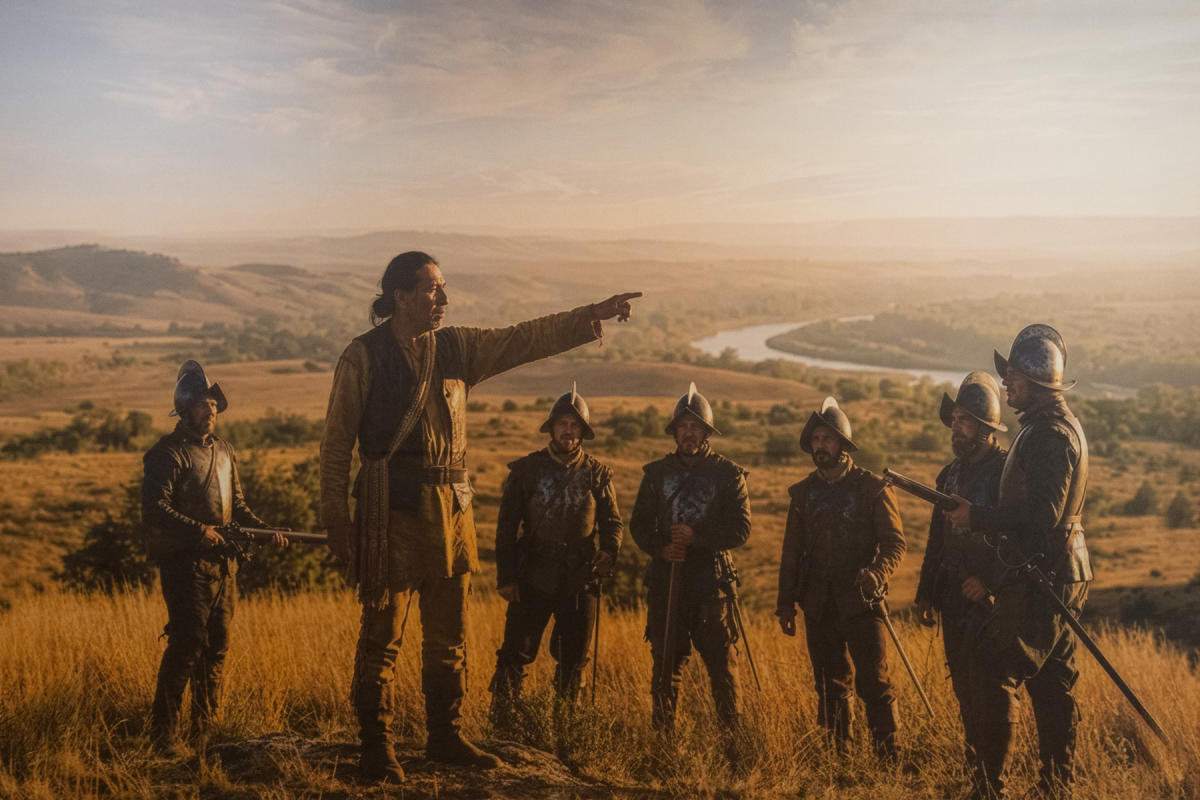
Spanish conquistadors first encountered the settlement in 1541, when Francisco Vázquez de Coronado explored much of present-day Kansas in search of gold. In 1601, Juan de Oñate led soldiers through this region on a similar quest for wealth. He and 60 to 100 of his men battled 1,500 Excanxaques, enemies of the Etzanoans, near what is now Arkansas City.
Archaeological excavations have turned up Spanish bullets and cannonballs, along with a water shrine and a Spanish horseshoe nail. Unearthed historical documents reveal that the European explorers called this land “The Great Settlement.”
Today, some believe Etzanoa rivals, if not surpasses, the Cahokia Mounds State Historic Site in Illinois—long considered the largest pre-Columbian settlement north of Mexico. Ongoing research and future digs will determine if that is true. What is certain is that by the mid-18th century, the great city had all but disappeared. Arkansas City would be founded in 1870.
The conservancy continues to authenticate stories of the settlement while expanding and enhancing what visitors can experience at the center.
“It is really nice to know that what we wanted is now finally happening,” Headrick says.
Guided tours run on the first and third Saturdays of each month from 9 a.m. to noon, weather permitting. Reservations are recommended. Cost is $15; children age 5 and under are free. The center is open Fridays, Saturdays and Sundays, 10 a.m. to 7 p.m., April through September; October through March, the center is open 10 a.m. to 4 p.m.
Regular admission is $6 for children ages 6–12; $12 for adults; and $10 for seniors, military and teachers. An eight-minute, meticulously researched and narrated virtual reality experience of Etzanoa, from the perspective of the Spanish explorers, is available for an additional $10. Group rates are available for large groups and schools.
etzanoa.net / 620.666.0069


